

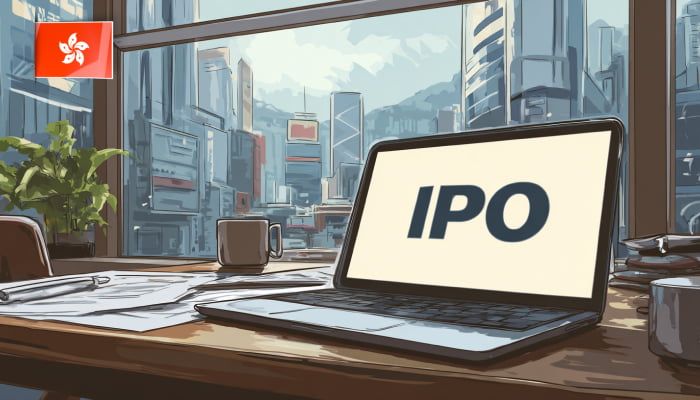
An IPO in Hong Kong opens a previously private company’s shares to public investors, establishes a quoted share value and gives the business capital for expansion. Companies choose this route to raise their market valuation, improve transparency and move beyond private ownership.
Hong Kong combines close links to mainland investors with international reporting and governance practices. Its stock market ranks among Asia’s most reliable venues for initial offerings and is closely supervised. For businesses weighing a US or mainland listing, that combination can make the city an attractive alternative and a route to Asian capital.
This guide is for companies considering an international share offer. It covers the legal conditions for admission and the preparatory work behind an application, then examines why Hong Kong holds a leading place among Asian listing centres. Market developments and common errors are also considered, including those that delay an offer or create difficulties after listing.
What is an IPO?
The abbreviation IPO refers to an initial public offering. Before one takes place, a company is usually held by relatively few owners, and its shares have no exchange market. In an IPO in Hong Kong, investors subscribe for shares and broaden the ownership base; admission makes exchange trading possible. The business thereby gains access to funding beyond its existing owners.
Proceeds can supplement working capital, fund technological development or finance a new business activity or overseas expansion. An offer succeeds or fails on investor demand and on how transparent the company is about its operations.
Four terms describe different aspects of the transaction:
- Prospectus: a formal document for prospective investors describing the business, its leadership and the risks of investing.
- Shareholders: the people or organisations with an ownership interest represented by shares.
- Market capitalisation: the combined market value of every share in issue.
- Liquidity: how readily an asset can be sold without materially reducing its value.
Participation need not be confined to domestic investors. An account with a broker admitted to trade in Hong Kong is enough for a private investor based abroad to take part in a Chinese company’s offer.
Why choose Hong Kong?
Hong Kong is still among the most convenient places for raising capital by public offering, and issuers gain a strategic edge from its direct link to Asia’s financial sector. For mainland businesses, a Hong Kong IPO provides a route to public investment through a venue that follows international practices, without the issuer having to satisfy a Western jurisdiction’s listing rules. Overseas investors can use the same venue to reach expanding East Asian industries without investing directly through a mainland market. The city’s proximity and commercial ties to Mainland China explain much of this appeal.
Applicants work within published rules and established review procedures. Because the requirements are stated clearly, an applicant can plan its preparation with legal certainty and faces fewer obstacles to entry, while investors can approach the process with greater confidence. Local brokers and lawyers, along with other advisers, can assist from initial preparation through regulatory review. Their involvement helps the issuer limit errors and move through the review more quickly.
Tax treatment can add to the attraction for an international group. Hong Kong generally levies no tax on dividends in shareholders’ hands or on gains of a capital nature. Any expected saving must nevertheless be tested against the group’s structure, the source and character of its income, and its investors’ tax position.
Trading is another consideration, as liquidity on HKEX ranks among the highest in Asia. Active trading lets holders enter and exit positions more readily, which can increase interest in new issues. Trading volumes differ from one newly listed stock to another.
Legal framework and regulators
SEHK, a wholly owned HKEX subsidiary, decides whether to admit an applicant. Applicants file with SEHK and must resolve its review questions before trading begins. Independent oversight is exercised by the SFC (Securities and Futures Commission). HKEX, for its part, is a commercial company rather than a government body and works under SFC supervision. Beyond the offer itself and its disclosure, the SFC monitors the conduct of advisers, underwriters and the investment intermediaries taking part. Applications reach it through dual filing, and it can oppose one outright or let it proceed on conditions.
Separate instruments govern the issuer as a company and the offer itself:
- Companies Ordinance: governs company formation and management.
- Listing Rules: the applicable Hong Kong listing requirements cover Main Board admission, financial reporting, announcements and board composition.
- Securities legislation: governs share offers and their participants. Where the offer document is a statutory prospectus, the Companies (Winding Up and Miscellaneous Provisions) Ordinance also applies.
Investors must receive a clear account of the business: who controls it, how it operates, its financial position and the risks they would assume. Responsibility for what the issuer discloses lies with its directors. The licensed sponsor has a separate duty to conduct reasonable due diligence on supporting information; it also advises on compliance and communicates with the authorities. A prospectus or other listing document that omits or misstates material information exposes the application to refusal and, after admission, the listing to cancellation.
An eligible issuer may prepare its accounts under HKFRS (Hong Kong Financial Reporting Standards) or IFRS (International Financial Reporting Standards), as the rules allow. Reporting on an accepted basis enables investors in different countries to compare companies’ finances.
Main requirements for an IPO in Hong Kong
Financial eligibility, public ownership and independent oversight must all be addressed before filing. Failing even one of these conditions can cost an applicant its admission, since SEHK relies on them to shield investors and keep trading orderly.
Financial eligibility
Results for three financial years are normally required of a Main Board applicant, which must also pass any one of these tests. Expected market capitalisation is the anticipated combined value of issued shares on admission.
|
Financial test |
Minimum expected market capitalisation |
Other financial minimums |
|
Profit test |
HK$500m |
Attributable profit of HK$80m across three years: HK$45m for the first two combined; HK$35m for the final year |
|
Market capitalisation/revenue/cash flow test |
HK$2bn |
Revenue of HK$500m in the latest audited year; positive operating cash flow totalling HK$100m across three years |
|
Market capitalisation/revenue test |
HK$4bn |
Revenue of HK$500m in the latest audited year |
SEHK uses these tests to screen out businesses that are not yet financially stable, so investors can place more confidence in the issuers that pass. Specialised applicants may have separate eligibility routes.
Public ownership and share availability
Public ownership involves two questions: what proportion of the share class the public holds, and how many public shareholders there are. For an issuer incorporated outside Mainland China with one share class, the minimum initial public holding is set between 10% and 25% by reference to the class’s expected market value. H-share and A+H structures follow different rules. The proportion of public holdings freely tradable at admission is assessed separately, and a waiver may be available where the rules permit.
Normally, the Main Board expects a base of 300 or more independent public shareholders. An issuer’s core connected persons, among them its directors and substantial shareholders, do not count as public shareholders. Their holdings fall outside the public float. Where ownership is broad, individuals and institutions can buy in, trading stays liquid and manipulators find the price harder to move, so the market arrives at a fairer value.
Independent oversight
A company preparing an IPO in Hong Kong needs directors who oversee its adherence to governance standards and act for all shareholders. No Main Board issuer may have fewer than three independent non-executive directors. Independence is assessed with regard to family relationships and financial ties involving owners or senior managers.
An audit committee is required, as are remuneration and nomination committees. Procedures for protecting company information and handling conflicts of interest are also needed; consistent use of them builds standing with public shareholders.
The sponsor and listing documents
The sponsor examines eligibility and disclosure accuracy during the Hong Kong IPO process. Every new applicant needs this adviser to coordinate the lawyers and auditors, guide compliance work and represent the issuer in dealings with the authorities. Where the sponsor has experience of local offerings, it can strengthen confidence in the information investors receive and identify difficulties before they prolong review.
Building and checking the disclosure
A prospectus brings together the information on which investors assess the issuer. Alongside its business history and ownership, it describes management, financial performance and principal risks. Where material, counterparties and contractual obligations must also be disclosed, as must litigation and internal procedures.
Legal and financial due diligence, which every applicant must undergo, establishes whether the supporting records substantiate those disclosures. Before submission, the prospectus goes through a compliance check by the lawyers and sponsor; the issuer then corrects any discrepancies.
Preparing for admission is demanding but can be worthwhile for the issuer. Investors carry less risk, and trust the market more, when an issuer clears its financial and governance tests and verifies what it discloses. With these conditions satisfied, an issuer can complete the listing stages and draw on international capital.



Stages of the Hong Kong IPO process
Preparation starts well before the application. The work of management and the external advisers falls into the six stages below. A team that starts planning early and handles each stage with care can obtain approval sooner and give the offer a better chance of success.
The first task for the lawyers, auditors, financial advisers and sponsor is to assess whether the issuer is eligible and how its group is structured. Accounts and contracts fall within their review, as do tax history and operations. Risks identified at this stage can be addressed before filing; unresolved weaknesses may later prevent approval.
With the sponsor appointed, the team prepares the submission and makes any necessary governance changes. The sponsor represents the applicant before SEHK and the SFC. Drawing on previous local offers, it can anticipate questions and limit avoidable delays; investors also place more trust in offerings led by experienced sponsors. No new applicant may proceed without a sponsor.
The sponsor carries responsibility for completing the filing package and for keeping to every deadline. Several months may elapse while SEHK reviews an application to list on HKEX. Queries from the exchange on ownership, operations or disclosure call for prompt answers, prepared with legal support, before the admission decision.
During review, the issuer settles the prospectus text jointly with the sponsor and the lawyers. The document must accurately explain the business, those managing it, its finances and its risks. Misstatements may prevent the offer from proceeding. Following clearance, the prospectus serves as the formal disclosure document for the sale.
A roadshow introduces the business to potential investors, sometimes in several countries. During bookbuilding, prospective buyers indicate quantities and acceptable prices. Those indications are the reference point for fixing the final offer price, which in turn establishes the implied company valuation.
Allotment determines the shares each investor receives. Exchange trading then begins, bringing the issuer into the public market. The amount raised reflects preparation, market conditions and investor demand. A successful offer can provide substantial funding for the company’s growth.
Obligations after a Hong Kong listing
Once listed, the company answers for its conduct to investors and the regulator, and to society more broadly. After a Hong Kong IPO, the issuer needs controls and governance capable of supporting two kinds of disclosure: scheduled financial reporting and announcements prompted by events.
The reporting calendar
Three publications make up the regular cycle:
- Preliminary annual results: the headline figures for the year, announced before the full report appears.
- Annual report: audited accounts, accompanied by discussion of management, material risks and the outlook.
- Interim report: first-half financial information prepared under the same accounting policies as the annual accounts; an audit is not normally required.
The reports are published through the prescribed channels, including the company website and HKEXnews, where investors and regulators can access them. Accounts follow a framework accepted for the issuer, such as IFRS or HKFRS. Overseas groups in particular must keep preparing their accounts on an accepted basis after listing, as the rules require and as the market expects.
Late reporting or unreliable figures may attract sanctions, including trading suspension. Serious breaches can lead to public censure or, ultimately, delisting.
Events, risks and governance
Reporting dates do not determine every disclosure deadline. A development the applicable rules treat as disclosable has to be announced promptly. Such developments include reportable changes in ownership or management, or in dividend policy. Where the rules so provide, a major transaction, merger or acquisition must likewise be announced. Any required update on a significant divergence from an earlier forecast must also be published promptly. Investors who receive disclosure on time can reach informed decisions, and sudden price swings become less likely; SEHK or the SFC may take action over delays.
To protect minority shareholders and sustain market confidence, the company needs risk-management procedures and full disclosure of material information. The HKEX Corporate Governance Code applies in addition. Its elements include transparent procedures for selecting directors, as well as rules on dealing with shareholders and protecting their interests.
ESG (environmental, social and governance) disclosure brings further obligations. Climate disclosures are being phased in from the 2025 reporting year. The applicable sustainability requirements include reporting on carbon emissions, energy use and efficiency, board diversity and employment practices.
Hong Kong’s listing boards compared
SEHK’s Main Board generally serves established businesses with a longer financial history. A GEM listing in Hong Kong suits smaller companies still in their growth phase. Both boards impose continuing duties, despite their different admission standards.
|
Point of comparison |
Main Board |
GEM |
|
Financial history |
Normally three years |
Normally two years |
|
Expected market capitalisation at listing |
HK$500m on the standard profit route |
HK$150m on its cash-flow route |
|
Profit / cash flow |
Standard profit route: HK$80m across three years, with the annual split set out above |
No general profit test; standard cash-flow route: at least HK$30m in positive operating cash flow across two years |
|
Public ownership |
Varies by share class and expected market value |
The applicable GEM initial public-float and free-float provisions govern |
|
Public shareholders |
Normally 300 or more |
Normally 100 or more |
|
Sponsor for a new applicant |
Mandatory |
Mandatory |
|
Accounts: permitted frameworks include IFRS and HKFRS |
Applicable framework required |
Applicable framework required |
|
Typical issuer and investor base |
More established businesses seeking international capital |
Growth businesses, often appealing to a more local market |
|
Trading after admission, subject to demand for each issuer’s shares |
Usually deeper |
Usually thinner |
GEM sets lower requirements than the Main Board, though they remain demanding: applicants must satisfy both the applicable financial test and the market capitalisation minimum. A business can meet GEM criteria while still short of Main Board eligibility, although perceived risk can limit investor interest and trading. Subsequent transfer is possible once the relevant Main Board conditions are met.
When you study the practicalities of a Hong Kong offering, you should compare the two boards and select whichever best matches your current position and growth objectives. The Main Board typically offers greater liquidity to an established company in search of international funds; GEM caters to earlier growth stages.
Within the wider HKEX group, SEHK handles share trading and other companies provide clearing and depository services. Debt instruments trade on the bond market, while the derivatives market covers futures and options. Two programmes facilitate cross-border trading in eligible mainland and Hong Kong shares: Shanghai–Hong Kong Stock Connect and Shenzhen–Hong Kong Stock Connect. Both are trading links, not separate exchanges.
Trends and opportunities for Hong Kong IPOs
Eligibility alone does not determine whether an offer will succeed. Technology, changing regulation and competition between financial centres are reshaping the market. Companies considering Hong Kong need to account for these developments when deciding how and when to proceed.
Technology and investor demand
Growing demand for digital services, cloud computing and AI has contributed to the greater presence of technology businesses among issuers. E-commerce platforms, fintech companies and manufacturers of smartphone components have all completed public offerings. Both funds and private investors may see potential for high returns, particularly when the company has a steady revenue stream and a scalable business model. Such companies still need a corporate structure that satisfies the listing conditions.
Sustainability in investment decisions
A growing number of investors take ESG practices into account when assessing an issuer. An applicant is now obliged to disclose how it handles ESG matters and must have its reporting on them in place once listed. Applicants use HKEX guidance when preparing their ESG disclosures. Funds with a sustainability mandate weigh these disclosures, and clear reporting can help an issuer attract their investment.
Choosing between financial centres
Competing routes to public capital exist in Singapore and Shanghai, and even in New York. Singapore attracts Southeast Asian businesses through its admission arrangements, while China’s development of venues such as the STAR Market gives mainland companies more domestic options. Hong Kong nonetheless keeps its advantage, because issuers that list on HKEX reach international capital and trade on infrastructure more mature than that of mainland venues.
Timing in a changing economy
Higher interest rates, geopolitical uncertainty or slower growth can cause an issuer to defer its plans. More cautious investors may subscribe for fewer shares or accept only a lower price. Despite these pressures, Hong Kong continues to draw large offers from businesses seeking simultaneous access to Asian and international capital.
Conclusion
Corporate structure, financial disclosure and regulatory compliance all require attention before admission. Prospectus drafting draws in the sponsor and the auditors, while the application itself must satisfy HKEX and SFC standards. Investors can assess the business more confidently when the issuer reports transparently.
A public offering involves several connected stages and continuing responsibilities. Ownership, tax consequences and the capacity to meet post-listing obligations call for particularly early assessment. Defects in preparation can prolong review, lead to refusal or have consequences after trading begins.
Should you plan an IPO in Hong Kong, our specialists can guide you through every stage, from the first readiness review and document drafting to the filing itself and dealings with the regulators. We provide comprehensive legal and financial support, keep your risks to a minimum and help you complete the listing procedure successfully.
 Crypto Hong Kong
  Establishing a bank in Hong Kong
  License for a payment system in Hong Kong
  Buy a company with Money Service Operator (MSO) licence in Hong Kong
  Arbitration in Hong Kong
  ICO in Hong Kong